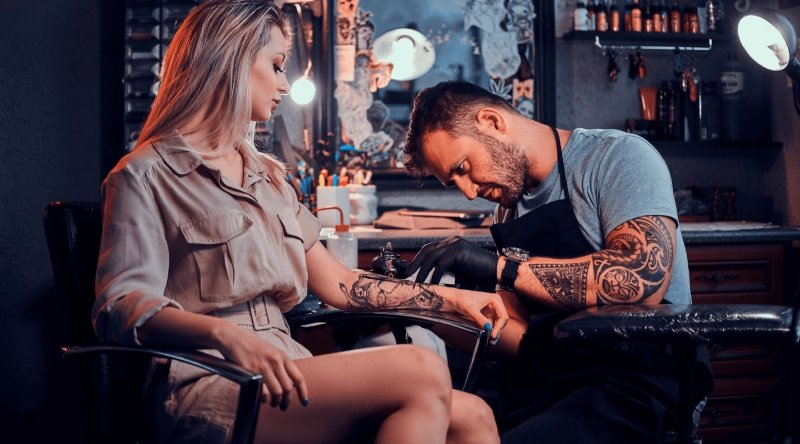
Getting your first tattoo is exciting, but it can also feel a bit overwhelming if you don’t know what actually happens during the appointment. Once you understand the process, it becomes much more comfortable and straightforward. Professional studios such as Raleigh Tattoo Company (https://raleightattoocompany.com/) and Monochrome Tattoo Studio (https://monochrometattoostudio.com/) typically guide first-time clients through each step so nothing feels rushed or unclear.
1. Consultation and design discussion
Your appointment usually begins with a consultation. This is where you talk with the artist about your idea, style, size, and placement. The artist may sketch or refine your design so it works properly on your body, not just on paper. Placement is especially important because the shape of your muscles and movement of your skin can affect how the tattoo looks.
This stage is about translating your idea into something that works long-term. Artists at places like Raleigh Tattoo Company often spend time adjusting spacing, proportions, and flow so the tattoo fits naturally with the body.
2. Skin prep and stencil application
Once the design is finalized, the artist prepares your skin. The area is cleaned thoroughly and shaved if needed. Then a stencil of your tattoo is applied. This stencil is essentially a temporary outline of your design placed directly on your skin.
You’ll be shown the placement in a mirror and given time to approve it. This step is important because once tattooing starts, the placement is locked in. Many artists at Monochrome Tattoo Studio encourage clients to move around slightly at this stage to see how the design looks from different angles.
3. Hygiene, setup, and safety
Before tattooing begins, the artist prepares a sterile workstation. Everything that touches your skin is either single-use or fully sterilized. Needles, ink caps, gloves, and machine covers are all set up fresh for each client.
This focus on hygiene is not just studio practice—it’s supported by medical standards. Public health research from the Centers for Disease Control and Prevention explains that proper sterilization and single-use equipment are essential to reduce infection risk in body art procedures (https://www.cdc.gov/tattooing/).
4. The tattooing process
Once everything is ready, the tattooing begins. The machine uses small needles to deposit ink into the dermis layer of your skin. The sensation is often described as scratching or a vibrating pressure. Pain levels vary depending on placement, size, and your own sensitivity.
Research from Harvard Health on pain perception shows that discomfort is highly individual and influenced by both physical and psychological factors (https://www.health.harvard.edu/pain). This is why two people getting tattooed in the same area can experience it very differently.
During the session, the artist works in sections, wiping the area regularly so they can see the progress clearly and keep everything clean.
5. Time, breaks, and session length
The length of your appointment depends on the size and detail of your tattoo. Small designs might take under an hour, while larger or more complex pieces can take multiple hours or multiple sessions.
You can take breaks at any point if needed. Experienced studios such as https://raleightattoocompany.com/ pace longer sessions carefully so the client stays comfortable and the quality remains consistent throughout.
6. Finishing the tattoo
Once the tattoo is complete, the artist cleans the area and removes any excess ink. A protective covering is then applied to shield the fresh tattoo from bacteria and friction immediately after the session.
You’ll also get a chance to see the finished result before leaving the studio, along with detailed aftercare instructions.
7. Aftercare and healing process
Aftercare is one of the most important parts of getting a tattoo. You’ll be instructed to keep the area clean, avoid soaking it in water, apply recommended ointments, and protect it from direct sunlight.
Medical guidance from institutions like the Mayo Clinic highlights that proper aftercare significantly reduces infection risk and helps the skin heal correctly (https://www.mayoclinic.org/healthy-lifestyle/adult-health/in-depth/tattoos-and-piercings/art-20045067).
During healing, it’s normal for the tattoo to scab slightly or peel. This is part of the skin’s natural recovery process. The key is not to pick or scratch it.
8. Long-term care and maintenance
Even after healing, how you care for your tattoo affects how it looks over time. Sun protection, moisturized skin, and overall skin health all play a role in keeping the tattoo looking sharp.
Studies in skin health and dermatology, such as resources from academic medical centers like Johns Hopkins Medicine, emphasize that UV exposure is one of the biggest contributors to ink fading over time (https://www.hopkinsmedicine.org/health/conditions-and-diseases/tattoos).
Final thoughts
Your first tattoo appointment is a structured process designed for safety, precision, and comfort. From consultation to aftercare, each step has a clear purpose. Once you understand how everything works, the experience becomes much easier to enjoy.
With guidance from experienced artists at studios like Raleigh Tattoo Company (https://raleightattoocompany.com/) and Monochrome Tattoo Studio (https://monochrometattoostudio.com/), your first tattoo becomes less intimidating and more of a well-planned creative experience.